


To store gas safely at home for 2+ years, follow the 3-Layer Protocol: 1. Use NATO-standard metal Jerry cans (airtight/non-permeable), 2. Use Ethanol-Free (REC-90) gasoline, and 3. Mix a professional-grade stabilizer like PRI-G at the pump. Always store fuel in a cool, detached structure at least 50 feet from your home—never in an attached garage or basement.
In the modern economy, gasoline isn’t just a commodity; it’s a vulnerability. Between geopolitical tensions in oil-producing regions and the increasing fragility of the domestic power grid, “just-in-time” fuel delivery is no longer a guarantee. If you wait for the news to announce a shortage before you buy, you are already too late. You will be stuck in a mile-long line at the pump, paying a “panic tax” for the last few gallons of degraded fuel. True security means having a stabilized, 24-month reserve that was bought at yesterday’s prices.
The 3-Layer Fuel Defense System
| Layer | Component | Purpose |
| 1. The Shell | NATO Metal Jerry Can | 100% Vapor-proof; prevents oxidation and “breathing.” |
| 2. The Core | REC-90 (Ethanol-Free) | Eliminates phase separation and internal moisture issues. |
| 3. The Guard | PRI-G Stabilizer | Chemically maintains fuel shelf-life for 24+ months. |
3 Fuel Storage Mistakes That Ruin Most Gas Reserves
Most “preppers” aren’t building a reserve; they are building a fire hazard that will fail when the engine turns over. Avoid these three critical errors:
- Mistake 1: Storing gasoline in an attached garage or basement is a catastrophic risk. Vapors are heavier than air; they crawl along the floor toward water heaters and furnace pilot lights. Rule: If it shares a wall with your sleeping quarters, it is the wrong place to store fuel.
- Mistake 2:Cheap, $15 red plastic jugs are permeable. They “breathe,” allowing high-octane vapors to escape while letting oxygen in. This leads to rapid oxidation and “plastic swelling” that ruins seals.
- Mistake 3: Most people buy standard E10 pump gas. Because ethanol is hygroscopic, it pulls water from the humidity in the air. This leads to Phase Separation, where a layer of water-sludge sinks to the bottom, ready to destroy your fuel pump.
Why Does Standard E10 Gasoline Go Bad So Quickly?
Standard E10 gasoline goes bad quickly because the 10% ethanol content is hygroscopic, meaning it actively attracts and absorbs moisture from the air. Within 30 to 90 days, this moisture causes a chemical reaction known as Phase Separation, where the ethanol and water molecules bond and sink to the bottom of the tank. This creates a highly acidic, non-combustible sludge that corrodes fuel lines, clogs carburetors, and prevents the engine from firing.
- The 30-Day Clock: Unlike pure gasoline, ethanol-blended fuel begins to oxidize almost immediately upon exposure to oxygen, leading to the formation of “gum” and varnish.
- Hygroscopy Explained: Even in a “sealed” plastic container, temperature fluctuations cause the can to vent. As the can “breathes,” it pulls in humid air, which the ethanol then traps inside the fuel.
- The “Engine Killer”: Once phase separation occurs, the remaining gasoline on top loses its octane rating, while the watery sludge at the bottom is sucked into your engine, causing permanent hardware damage.
What Are the Best Containers for Gas Storage (Long-Term)?
The best containers for long-term fuel storage are NATO-standard metal Jerry cans with a fully gasketed, cam-lock lid. Unlike consumer-grade plastic jugs, high-quality metal cans (such as those made by Wavian) are 100% vapor-proof and non-permeable, preventing the evaporation of volatile compounds and the intake of oxygen. For any fuel reserve intended to last 24 months or longer, a Rezistol-lined metal container is a non-negotiable requirement to prevent internal rust and external “breathing.”
- The Gold Standard (NATO Metal): These cans use a locking pin and a heavy-duty rubber gasket to create a true vacuum seal. This prevents the “breathing” cycle that introduces moisture into the fuel.
- Plastic Failure: Standard HDPE plastic cans are semi-permeable. Over time, the most combustible elements of the gasoline (the light-end hydrocarbons) leak through the plastic walls, leaving behind a “stale” fuel with a lower octane rating.
- Vapor Integrity: If you can smell gasoline in your storage area, your container has failed. A professional-grade metal can eliminates the olfactory signature, keeping your fuel stable and your storage site stealthy and safe.
Top 3 Verified Gas Storage Containers
1. Wavian Authentic NATO Jerry Can
The Wavian NATO Jerry Can is the gold standard for long-term storage. Its Rezistol internal lining prevents the rust that often ruins standard metal cans over time. It is the only can designed to be 100% vapor-proof, keeping your garage safe and your fuel’s octane rating intact for years.
- Pros: 100% leak-proof in any position; internally lined to prevent corrosion; manufactured to military specs.
- Cons: Highest cost; heavy when full (approx. 45 lbs).
- Specs: 0.9mm Steel; 5.3 Gallon (20L); NATO-spec bayonet closure; EPA/CARB/DOT approved.
2. Eagle 2 Gallon Type I Safety Can
The Eagle 2 Gallon Type I Safety Can is a professional-grade, American-made steel container. It is specifically designed for industrial safety, featuring a seamless construction that removes the risk of leaks at the base.
- Pros: Auto-venting lid prevents swelling; built-in flame arrester; galvanized steel resists exterior rust.
- Cons: Round shape is less space-efficient than “slim” Jerry cans; 2-gallon capacity requires more units for a large reserve.
- Specs: 24-Gauge Galvanized Steel; 2 Gallon; UL/ULC listed and FM approved.
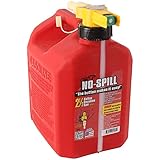
3. No-Spill 1450 Poly Can
For an affordable but high-quality plastic option, the No-Spill 1450 is the most reliable. It is 70% thicker than the cheap jugs at big-box stores and features a patented thumb-button nozzle for precise control.
- Pros: Most affordable; automatic flow stop prevents overfilling; lightweight and easy to carry.
- Cons: Plastic is semi-permeable (allows minor “breathing”); not recommended for storage longer than 12 months.
- Specs: High-Density Polyethylene (HDPE); 5 Gallon; EPA, CARB, and CPSC compliant.


Last update on 2026-03-09 / Affiliate links / Images from Amazon Product Advertising API
How Do You Stabilize Fuel for 2+ Years of Shelf Life?
To stabilize fuel for 2+ years of shelf life, you must stop oxidation and phase separation before they begin. The industry standard for long-term storage is to mix a professional-grade thermal stabilizer (like PRI-G) into Ethanol-Free (REC-90) gasoline at the point of purchase. This “at-the-pump” treatment ensures the additive is fully integrated into the fuel’s molecular structure, creating a chemical barrier against the moisture and oxygen that turn standard gasoline into unusable sludge within 90 days.
The Stabilization Rule Most People Miss
You must add your stabilizer to the empty Jerry can before you pull the trigger at the gas station. This ensures the incoming fuel pressure creates a perfect “vortex mix,” distributing the stabilizer evenly throughout the 5-gallon volume.
- Product Breakdown: While consumer-grade stabilizers (like standard Sta-Bil) are sufficient for overwintering a lawnmower, 24-month storage requires PRI-G. It is a refinery-grade treatment that prevents the formation of “gum” and varnish.
- The REC-90 Hack: Whenever possible, pay the “ethanol-free premium” for REC-90 gasoline. Since ethanol is the primary cause of moisture absorption, removing it is the single most effective way to guarantee your fuel will ignite during a crisis.
Is Storing Gas at Home Legal?
⚠️ SAFETY WARNING: FIRE CODE COMPLIANCE
Improper fuel storage can void your homeowner’s insurance and pose a lethal risk to first responders. Always consult your local Fire Marshal for specific municipal ordinances.
- NFPA 30 Standards: The National Fire Protection Association generally limits residential storage to 25 gallons in an approved area.
- The Small Circle Protocol: In urban environments, you must keep your footprint tight. This protocol dictates that you decentralize your stash. Split your storage into two detached, ventilated locations. This reduces the heat signature and ensures a single accident doesn’t consume your entire reserve.
Secure Your Gas Reserve
Fuel is the lifeblood of modern survival. Whether the next disruption is caused by geopolitical conflict, a natural disaster, or a simple economic spike, the difference between a resilient household and a desperate one comes down to three metal cans and a bottle of stabilizer. By following the 3-Layer Protocol, you aren’t just hoarding gasoline; you are locking in energy security for your family. Stop letting the global oil market dictate your mobility. Start your reserve today.
FAQ
Q: How long can I store gas at home before it goes bad? A: Untreated E10 gas lasts 30–90 days. Treated Ethanol-Free (REC-90) gas in metal NATO cans can remain viable for 2 to 3 years.
Q: Are metal Jerry cans worth the price? A: Yes. A $15 plastic can will degrade and leak within 2 years. A $80 Wavian NATO can will last a lifetime and preserve fuel that would otherwise spoil.
Q: Can I mix stabilized gas with old gas? A: No. Adding fresh gas to “sour” gas will not fix the old fuel; it will only accelerate the degradation of the new fuel.