


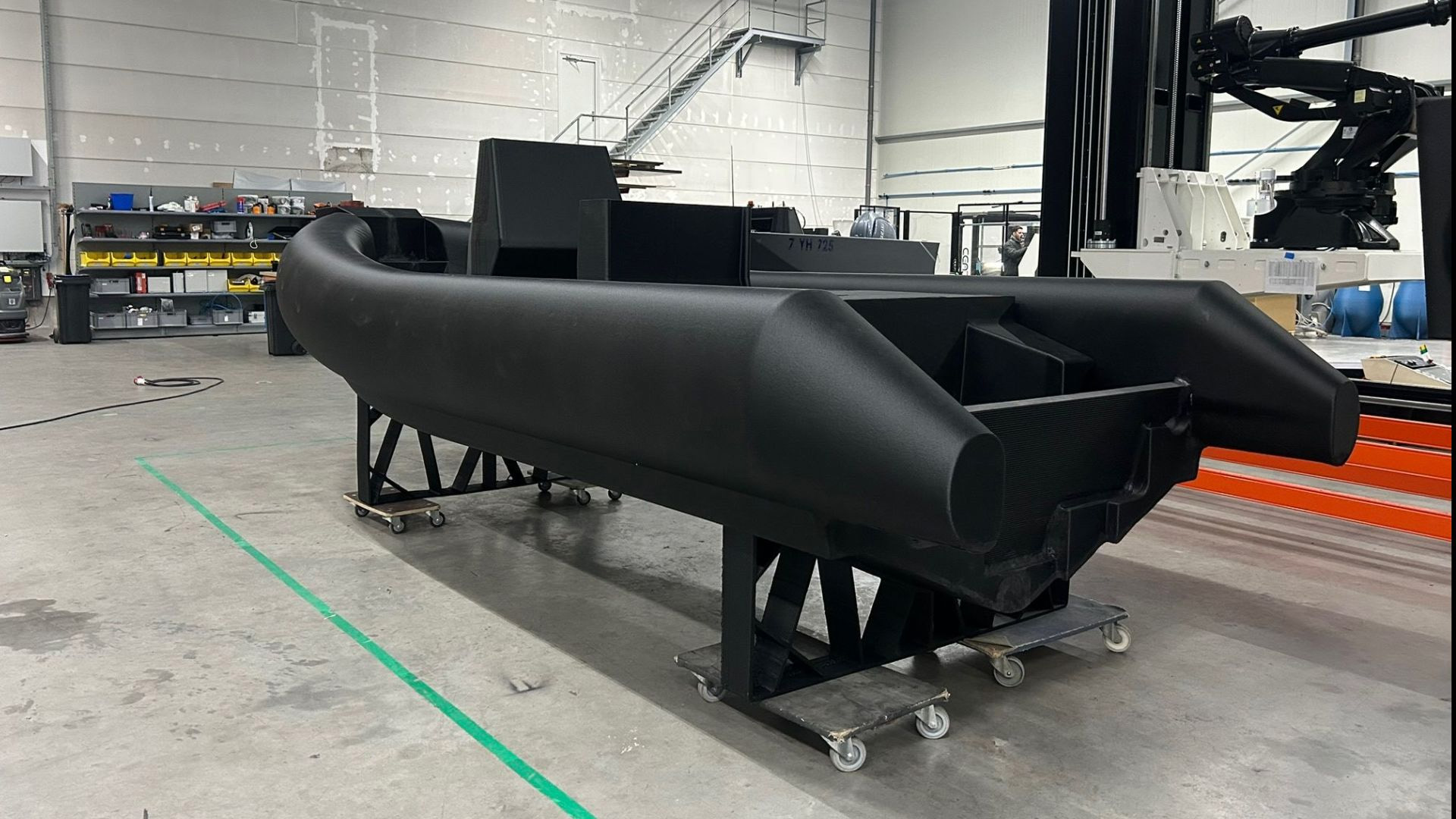
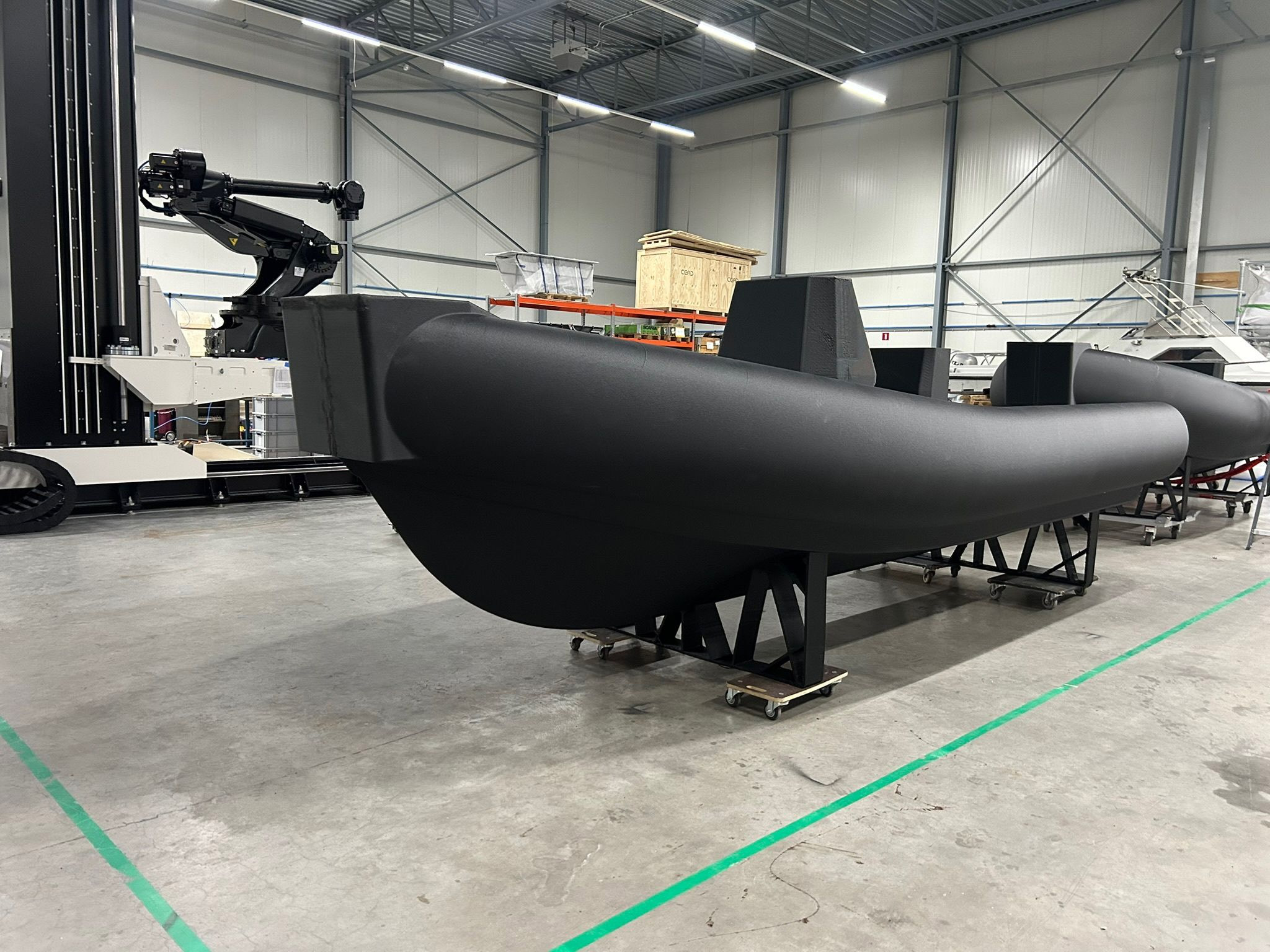
In an era where supply chains stretch across thousands of miles and traditional manufacturing can’t keep pace with rapid deployment needs, the U.S. military is turning to an unlikely hero: a 3D printer and volcanic rock. A Hawaii-based startup called Voltage Vessels recently submitted a six-meter rigid hull inflatable boat (RHIB) for Pentagon evaluation. This isn’t your average military vessel—it’s largely 3D-printed from a custom composite of recycled PETG plastic reinforced with chopped basalt fiber.
I first came across this story and couldn’t help but geek out over the clever engineering. What starts as a sustainability play quickly reveals itself as a strategic game-changer for maritime defense.
Why This 3D-Printed Boat Matters
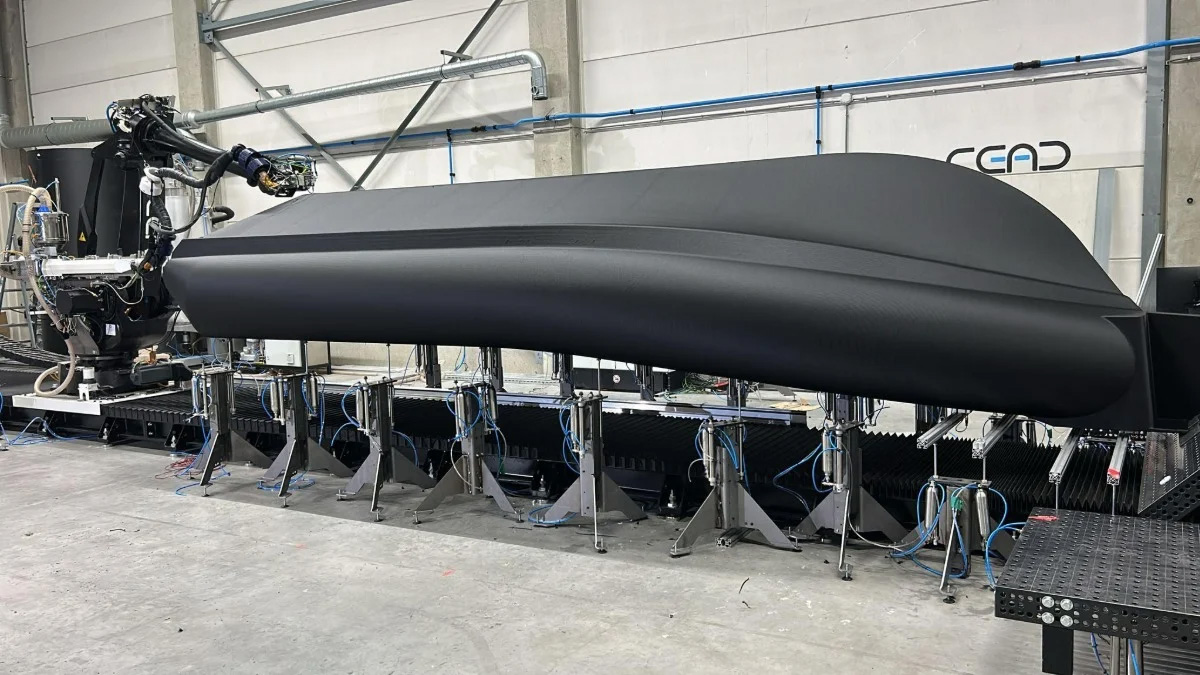
Traditional boat manufacturing relies on massive shipyards, expensive molds, fiberglass layups, and long-distance shipping. Voltage Vessels flips the script. Using a large-format additive manufacturing system from CEAD, they print the hull directly from a digital file. No molds. No lengthy supply lines. Just a printer, material spools, and local production capability at forward bases.

The company highlights a stark example: the 6,545-mile distance between Okinawa and San Diego. Instead of shipping boats across the Pacific, forces could theoretically download a file and print replacements on-site. This approach addresses one of the Pentagon’s biggest headaches—contested logistics in the Indo-Pacific region.
The Star Material: Eclipse X9 Composite
At the heart of this innovation is Eclipse X9, Voltage Vessels’ proprietary blend:

- Recycled PETG thermoplastic — Provides a tough, printable base that’s more environmentally friendly.
- Chopped basalt fiber — Derived from volcanic rock (abundant in Hawaii), it boosts tensile strength significantly.
According to reports, this composite achieves around 108 MPa tensile strength, outperforming some standard materials used in large-format 3D printing for marine applications.
Key advantages of basalt fiber in this context:
- Non-conductive — Reduces electromagnetic interference with sensitive naval electronics and autonomous systems.
- Lower radar cross-section potential — RF transparency could make the hull less visible to radar, complementing stealth geometry.
- Excellent water resistance and durability — Basalt naturally resists corrosion and environmental degradation better than many synthetics.
- Recyclability — Damaged hulls could theoretically be shredded and reprinted, closing the material loop.
Basalt fiber isn’t new in composites, but its use in large-scale 3D printing for structural marine hulls is cutting-edge. Studies and commercial applications show it offers a strong strength-to-weight ratio—often described as 15x stronger than plain plastic in fiber-reinforced forms—while being lighter than steel and more affordable than carbon fiber. Its radio transparency makes it particularly appealing for defense tech.
Broader Context: 3D Printing’s Rise in Maritime and Defense
This project doesn’t exist in isolation. The U.S. Navy has been investing heavily in additive manufacturing, with plans to deploy dozens of large-format printers worldwide for on-demand parts. Voltage Vessels scales this vision to full hulls.
Other examples in the space include:
- European firms printing recreational and work boats with recycled plastics and glass fibers.
- Projects using similar large-format extrusion for hulls up to 12 meters long.
What sets Voltage Vessels apart is the specific focus on defense needs—stealth, rapid deployment, and reduced logistics footprint—combined with local Hawaiian resources (basalt is literally everywhere there).
Potential Challenges and Realistic Outlook
Skeptics might wonder about long-term durability in saltwater, impact resistance, or certification hurdles for military use. These are valid points—3D-printed parts can have anisotropic properties (stronger in some directions than others), and marine environments are unforgiving.
However, the company has validated the material with institutions like the University of Maine, and large-format printing continues to mature with better adhesion, infill strategies, and post-processing coatings.
If scaled, the startup envisions producing material equivalent to thousands of hulls annually from forward locations. That’s a massive shift from centralized manufacturing.
Why This Feels Like a Turning Point
This story blends several megatrends: additive manufacturing, circular economy principles, and great-power competition logistics. It shows how a small team in Hawaii can potentially influence naval strategy by solving real problems with clever material science and digital tools.
Whether this specific RHIB makes it into fleet service remains to be seen, but the direction is clear. The military that prints its boats faster, closer to the action, and with smarter materials will hold a real edge.