


Space used to be the final frontier for exploration and satellite TV. Today, it’s rapidly turning into a contested battlefield where nations are racing to gain the upper hand. Israel, never one to sit on the sidelines when it comes to defense innovation, is leaning hard into this shift. Recent statements from top IDF officials and Defense Minister Israel Katz highlight a clear strategic pivot: treating space as a critical domain alongside AI, cyber, and electronic warfare.
The IDF’s “Data Revolution” and Space as a Battlefield
Brig.-Gen. Yael Grosman, the IDF’s Chief of Technology and Digital, recently laid it out in an interview. The Israeli military is undergoing a major “data revolution” to adapt to future conflicts. According to her, IDF Chief of Staff Eyal Zamir’s five-year plan explicitly calls for integrating space capabilities, backed by increased resources.
Israel’s space program isn’t new — it dates back to the 1988 launch of Ofek-1. But it has evolved dramatically. Satellites have played key roles in operations against Iran and its proxies like Hezbollah, Hamas, and the Houthis. During recent conflicts, the IDF captured tens of thousands of images from space, enabling real-time intelligence and precision strikes far from home.
Grosman emphasized the practical side: “There is no magic. You need satellites to provide communications, take pictures, relay data over thousands of kilometers…” This isn’t just about watching from afar — it’s about giving pilots and commanders the ability to operate deep into enemy territory as if it were right next door.
Challenges are growing too. Adversaries like Iran, Russia, and China are developing ways to disrupt satellite systems. On the flip side, Israel’s Sfeira Brigade and spectrum warfare units have already shown results, such as neutralizing a significant portion of Iranian drones in past operations.
Iron Beam Meets Iron Dome: Lasers on the Ground, Eyes on Space
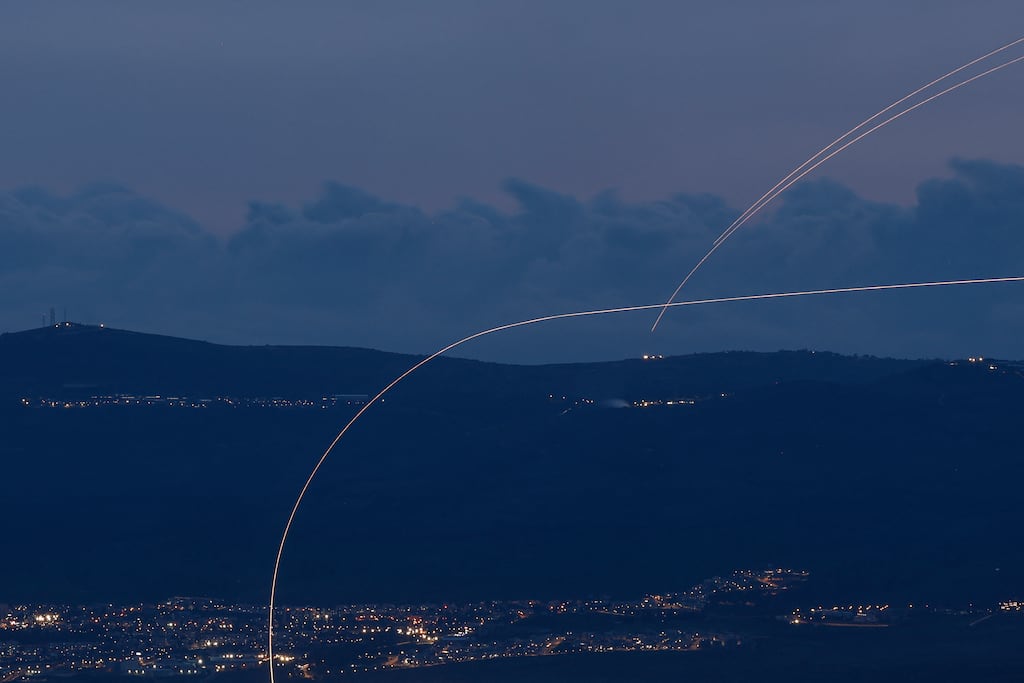
Complementing the space focus, Israel just wrapped up successful tests pairing its iconic Iron Dome missile system with the Iron Beam high-energy laser. The integration allows commanders to switch dynamically between expensive missiles and low-cost laser pulses depending on the threat — a smart way to handle saturation attacks without breaking the bank.
Each Iron Beam “shot” costs just a few dollars compared to tens of thousands for a Tamir interceptor. Rafael, the developer behind both systems, is pushing this hybrid approach to deal with high-volume rocket and drone barrages, especially relevant amid ongoing tensions with Hezbollah.
Katz’s Bold Vision: Offensive Space Lasers
Defense Minister Israel Katz took things a step further, stating outright that Israel aims to develop space-based attack lasers and become the world leader in this capability. “No country has the ability to mount attacks in space. We must be the leading country in the world with this capability,” he said. The goal? Deterrence and the ability to strike against well-resourced adversaries.
This builds directly on ground-based laser successes like Iron Beam and potential airborne variants. While details remain classified, the messaging is clear: Israel is investing in both defensive and offensive directed energy weapons (DEWs) for the space domain.
Critics and analysts note that this fits a broader global trend. The U.S. is also pouring resources into space-based systems (think concepts like the Golden Dome) and annual spending on laser tech in the hundreds of millions to billions. Lasers offer speed-of-light engagement, low per-shot costs, and precision — advantages that could reshape conflict thresholds.
Why This Matters: Expanding the Fight
What does all this mean on a practical level? Modern wars are multi-domain. You can’t ignore the electromagnetic spectrum, data flows, or orbital assets anymore. Israel’s experience with massive drone swarms and rocket barrages has driven innovation in layered defenses and rapid data integration.
AI is already saving lives on the battlefield through systems like the SMASH Hopper. Pair that with space-based sensors and potential orbital lasers, and you get a force multiplier that changes the calculus for both defense and offense.
Of course, this raises bigger questions about the militarization of space. Treaties exist, but enforcement is tricky when great powers are involved. For Israel, surrounded by threats and leveraging its tech ecosystem, staying ahead isn’t optional — it’s survival.